
Expert Guide: How to Inflate Snow Tube Sleds & Avoid 5 Common 2025 Mistakes
12월 8, 2025
Abstract
Properly inflating a snow tube sled is a foundational act that dictates the quality, safety, and longevity of the winter recreational experience. This document provides a comprehensive examination of the principles and procedures for optimal inflation. It moves beyond rudimentary instructions to explore the underlying physics of friction and pressure, elucidating how firmness directly correlates with speed and control. The analysis covers the preparatory stages, including material inspection and understanding environmental temperature effects on air volume. A comparative assessment of various inflation tools—from electric pumps to manual alternatives—is presented to guide user choice. The core of the text offers a meticulous, step-by-step guide on how to inflate snow tube sleds, addressing common valve types and methods for gauging correct pressure without specialized equipment. Furthermore, it identifies and deconstructs five prevalent inflation errors, providing corrective strategies to prevent tube damage and ensure user safety. The discussion extends to specific tube types, such as heavy-duty and hard-bottom models, and concludes with best practices for deflation, cleaning, and long-term storage, framing proper maintenance as integral to the product's life cycle.
Key Takeaways
- Use an electric, high-volume pump for the fastest and most efficient inflation.
- Inflate the tube until it is very firm to the touch, like a taut drum, to minimize friction.
- Always perform a final "top-up" of air outdoors to account for temperature changes.
- Understanding how to inflate snow tube sleds correctly prevents damage and ensures a faster ride.
- Center the inner bladder within the fabric cover before fully inflating for stability.
- Never use a high-pressure air compressor without a regulator, as it can burst the tube.
Table of Contents
- The Foundational Importance of Proper Inflation
- Pre-Inflation Ritual: Setting the Stage for Success
- Selecting the Right Inflation Device: A Comparative Guide
- The Core Method: A Detailed Walk-through on How to Inflate Snow Tube Sleds
- The Five Common Inflation Mistakes to Avoid in 2025
- Advanced Considerations for Specialized Snow Tubes
- The Post-Sledding Ritual: Deflation, Care, and Storage
- Frequently Asked Questions (FAQ)
- A Final Thought on Preparation and Play
- References
The Foundational Importance of Proper Inflation
The act of filling a snow tube with air might seem like a mere preliminary, a simple chore to be completed before the real fun begins. Yet, to consider it in such a way is to overlook the fundamental relationship between form, pressure, and function. The quality of a day spent on the snowy slopes is not determined solely by the steepness of the hill or the quality of the snow, but is deeply contingent upon the physical state of the vessel in which we travel. A properly inflated snow tube is not just a tool; it is a carefully calibrated instrument for interacting with the forces of gravity and friction.
The Science of Glide: Pressure, Surface Area, and Friction
To understand why inflation is so critical, one must first appreciate the physics at play. The speed of a snow tube is largely a function of minimizing friction between its bottom surface and the snow. An under-inflated tube presents a problem in this regard. When soft and sagging, the tube's bottom surface does not remain taut. As a rider's weight is applied, the center droops, creating a concave shape that "scoops" the snow rather than gliding over it. This dramatically increases the surface area in contact with the snow and, consequently, the force of kinetic friction acting against the tube's motion. The result is a slow, sluggish, and often frustrating ride.
Conversely, a tube inflated to optimal firmness maintains a convex or flat, rigid bottom surface. Think of it as the hull of a boat designed to cut through water with minimal resistance. This taut surface distributes the rider's weight more evenly and skims across the very top layer of snow crystals. The contact patch is minimized, and friction is reduced to its lowest possible value, allowing gravity to do its work most efficiently. The experience is transformed from a plodding drag to an exhilarating, near-frictionless glide. The process of learning how to inflate snow tube sleds is, therefore, an exercise in mastering these physical principles.
The Ethical Dimension: Safety and Rider Control
Beyond the pursuit of speed, proper inflation carries with it an ethical dimension related to safety and control. An under-inflated tube is not only slow but also notoriously difficult to steer or influence. Its pliable shape makes it susceptible to being "grabbed" by inconsistencies in the terrain, leading to unpredictable veering and a higher likelihood of tumbling. When we share a sledding hill with others, we enter into an implicit social contract to behave in a manner that does not endanger them. Operating a sled that is difficult to control constitutes a failure to uphold our end of this contract.
On the other extreme, a severely over-inflated tube presents a different kind of hazard. The materials, typically robust PVC for the inner bladder and a durable fabric like Oxford cloth for the cover, are designed to operate within a specific pressure range (). Exceeding this range, especially when combined with temperature fluctuations, can stress the seams to their breaking point. A sudden, catastrophic failure—a burst—at high speed can lead to a dangerous fall and potential injury. Thus, the careful act of achieving the correct firmness is an act of responsibility, ensuring the well-being of both the rider and those around them.
Material Integrity: How Inflation Protects Your Investment
A snow tube is an investment in future joy, and like any valued possession, it requires proper care to ensure its longevity. The way a tube is inflated and stored directly impacts its material integrity. When a tube is under-inflated, the fabric and PVC are prone to creasing and folding under the rider's weight. These creases become points of concentrated stress, weakening the material over time and making it more susceptible to punctures and tears.
Proper, firm inflation keeps the materials taut and smooth, distributing stress evenly across the entire surface. This prevents the formation of weak points and preserves the structural integrity of the seams and the fabric itself. When deflated for storage, a tube that has been consistently well-cared-for will show fewer signs of wear. Therefore, mastering how to inflate snow tube sleds is not just about a single day's performance; it is about extending the life of the object and ensuring it can provide many seasons of reliable fun.
Pre-Inflation Ritual: Setting the Stage for Success
Before a single puff of air enters the valve, a thoughtful preparatory process can prevent future complications and enhance the final outcome. This ritual is an essential part of the overall procedure, ensuring that the equipment is sound and the conditions are optimal.
Unboxing and Initial Inspection
Upon acquiring a new snow tube, the temptation is to rush it to the nearest hill. However, a moment of patience for a thorough inspection is a wise investment of time. Unfold the tube completely in a well-lit area. Examine the outer cover, paying close attention to the stitching on the seams and handles. Look for any loose threads or imperfections in the fabric.
Next, inspect the inner PVC bladder. Look for any obvious punctures, however small. Check the area around the valve, as this is a common point of stress. Ensure the valve cap and its base are free of cracks and that any threads are clean and well-formed. This initial check is your first line of defense against discovering a leak only after you have spent considerable effort on inflation.
Understanding Your Snow Tube's Anatomy
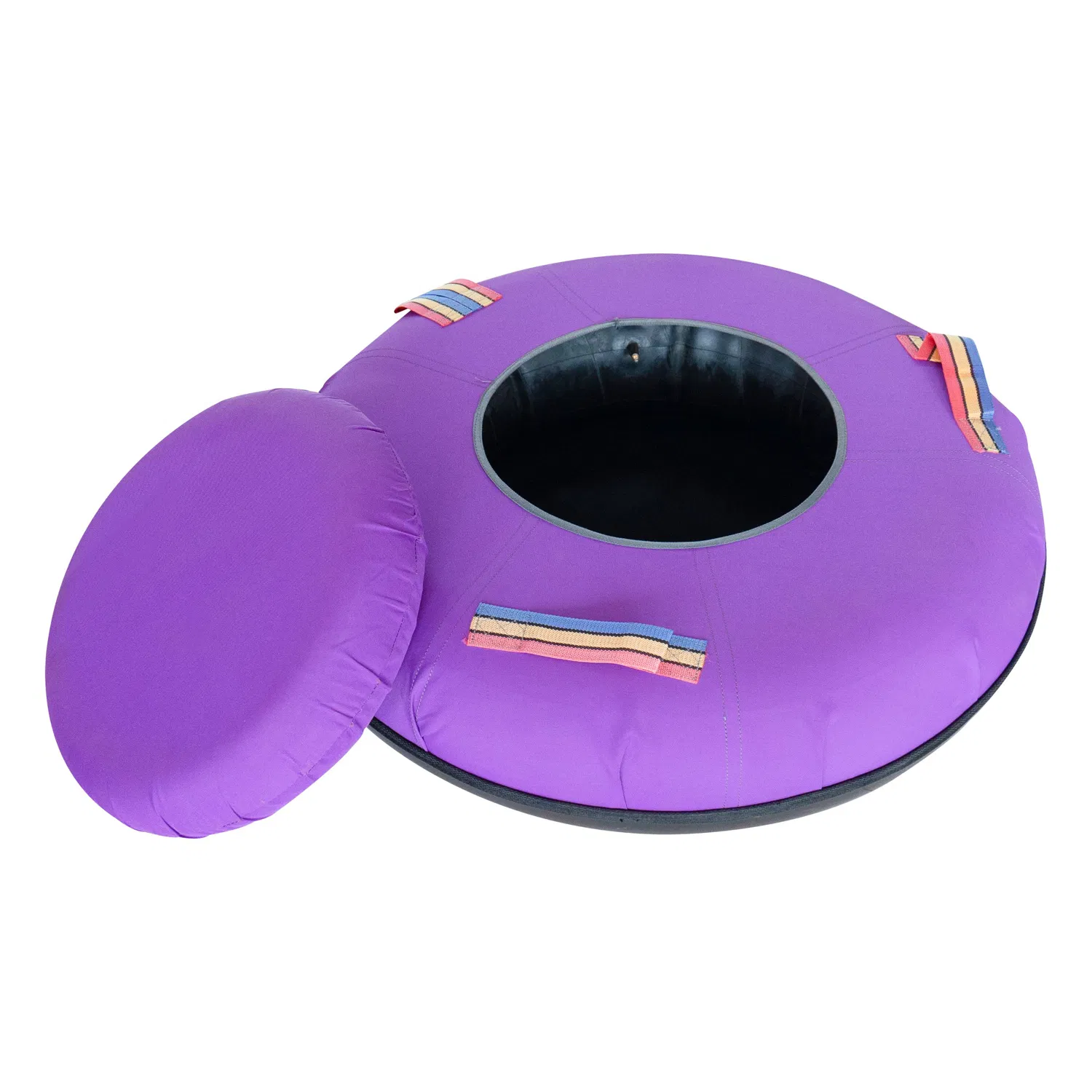
Familiarity with the components of your snow tube will demystify the inflation process. Most modern tubes consist of two main parts:
- The Outer Cover: This is the durable, colorful shell, often made from a heavy-duty polyester or nylon canvas. It provides puncture resistance, features handles for gripping, and often has a slick plastic bottom for enhanced speed.
- The Inner Bladder: This is the airtight, inflatable chamber, almost always made from a cold-resistant PVC. This is the part that actually holds the air.
The most critical component for inflation is the valve. There are several types, but the most common on high-quality snow tubes is the Boston Valve. It is a two-part system: a lower base that screws into the tube and an upper cap. The brilliance of the Boston valve is its one-way flap; when the upper cap is removed for inflation, air can go in but has difficulty escaping, making the process far less frantic. For deflation, you simply unscrew the entire base for a rapid release of air. Other tubes may use simpler "speed" or "safety" valves, which are single-piece flaps that push in.
The Impact of Temperature
Perhaps the most overlooked aspect of inflation is the role of ambient temperature. Air, like all gases, expands when heated and contracts when cooled. This principle, known as Charles's Law, has profound implications for a snow tube.
Imagine you inflate your snow tube in a warm, 70°F (21°C) living room until it is perfectly firm. When you take that same tube outside into freezing 20°F (-7°C) weather, the air inside will cool and contract. The pressure will drop, and your once-firm tube will become noticeably softer and under-inflated.
Conversely, if you inflate the tube to its maximum firm capacity in the bitter cold and then bring it into a warm lodge or leave it in a sunny spot, the air inside will warm up and expand. This can increase the internal pressure to a dangerous level, risking a burst seam.
The practical wisdom derived from this is twofold:
- If possible, perform the bulk of the inflation in an environment that is closer to the outdoor temperature, such as a cold garage or even outdoors.
- Always plan to do a final "top-up" of air right before you begin sledding to compensate for the initial temperature drop. Carry a small hand pump for this purpose. Dressing appropriately is also paramount; understanding what to wear snow tubing ensures comfort and safety during these temperature shifts.
Selecting the Right Inflation Device: A Comparative Guide
The tool you choose for inflation will significantly affect the speed, effort, and convenience of the process. While it is technically possible to inflate a snow tube by lung power, it is an arduous and impractical task not recommended for anyone. The primary options range from powerful electric pumps to simple manual ones.
The Powerhouse: Electric Air Pumps
For convenience and efficiency, nothing surpasses an electric air pump. However, it is critical to distinguish between the two main types:
- High-Volume, Low-Pressure (HVLP) Pumps: These are the ideal tools for the job. They are designed to move a large volume of air very quickly, filling large inflatables like snow tubes, air mattresses, and rafts in minutes. They operate at a low pressure (PSI), which is perfect for these applications and significantly reduces the risk of over-inflation. Many models come with both AC (wall outlet) and DC (car cigarette lighter) adapters, making them versatile for home or on-site use.
- High-Pressure Pumps: These are the pumps designed for car tires or bicycle tires. They move a smaller volume of air but at an extremely high pressure. Using a high-pressure air compressor without a regulator is extremely dangerous and can cause a snow tube to burst in seconds. If this is your only option, you must use it with extreme caution, in very short bursts, and constantly check the firmness to avoid a catastrophic failure.
The Manual Method: Hand and Foot Pumps
Manual pumps offer portability and do not require a power source, making them excellent for topping off a tube on the hill or as a primary inflator when you're off the grid.
- Double-Action Hand Pumps: These are highly effective manual pumps. They inflate on both the upstroke and the downstroke, doubling the efficiency of each movement. While they require significant physical effort, they can fill a snow tube in a reasonable amount of time (5-10 minutes).
- Bellows Foot Pumps: These are simpler and often less expensive. You press down with your foot to force air out. They are generally slower and less efficient than double-action hand pumps but are compact and easy to use for small adjustments.
Pump Comparison Table
To aid in your selection, the following table compares the most common inflation methods across key metrics.
| Pump Type | Speed | Effort Required | 휴대성 | Primary Use Case | Risk of Damage |
|---|---|---|---|---|---|
| Electric (HVLP) | Very Fast | Minimal | Moderate | Main inflation at home/car | Low |
| Double-Action Hand Pump | Moderate | High | Excellent | On-hill top-ups, no power | Very Low |
| Bellows Foot Pump | Slow | Moderate | Excellent | Small adjustments, backup | Very Low |
| Air Compressor (Tire) | Extremely Fast | Minimal | Low | Emergency only, with caution | Very High |
| Hair Dryer (Cool Setting) | Fast | Minimal | Good | Not Recommended | High (Melting) |
A Note on Valve Adapters
Regardless of the pump you choose, having the correct nozzle or adapter is essential. Most electric pumps come with a variety of interchangeable nozzles. Find the one that fits snugly inside your tube's valve opening. A loose fit will allow air to escape around the nozzle, making your efforts inefficient. A fit that is too tight might damage the valve. The goal is a secure seal that allows for maximum airflow into the bladder.
The Core Method: A Detailed Walk-through on How to Inflate Snow Tube Sleds
With the preparatory steps completed and the right tool selected, we arrive at the central task. This method provides a universal, step-by-step approach applicable to most standard snow tubes.
Step 1: Lay Out and Prepare the Tube
Begin by laying the uninflated snow tube on a flat surface, free from any sharp objects. If your tube has a separate inner bladder and outer cover, this is the time to insert the bladder. Unzip the cover and carefully feed the deflated bladder inside. Roughly position it so the valve stem of the bladder lines up with the corresponding opening in the outer cover. Do not worry about perfect centering yet; that comes in a later step.
Step 2: Access the Valve and Connect the Pump
Pull the valve through the opening in the cover so it is easily accessible. If you have a Boston valve, ensure the base is screwed in tightly, and then unscrew only the top cap. For a speed valve, simply pull the plug out.
Select the appropriate nozzle for your pump. It should fit securely into the valve opening. For a Boston valve, the nozzle will push against the one-way flap. For a speed valve, the nozzle will go directly inside. Connect the nozzle to your pump.
Step 3: The Initial Inflation Phase
Turn on your electric pump or begin operating your manual pump. The tube will begin to take shape rapidly. After about 30-60 seconds of inflation, when the tube is about 50-70% full, pause the process.
This pause is crucial, especially for tubes with covers. Reach inside the cover and adjust the inner bladder. Shift it around to ensure it is perfectly centered. The goal is to have an even amount of space and fabric all the way around the bladder. An off-center bladder will create an unbalanced, wobbly ride and put uneven stress on the cover. Once centered, you can resume inflation.
Step 4: Achieving Optimal Firmness—The "Feel Test"
This is the most critical and nuanced step in the entire process of how to inflate snow tube sleds. Since snow tubes do not have a recommended PSI (pounds per square inch) rating like a tire, you must rely on a tactile assessment of firmness.
Continue inflating while regularly checking the pressure with your hand. Here is what to look for:
- The Press Test: Press down firmly on the top surface of the tube with the palm of your hand. In a properly inflated tube, there should be very little "give." It should feel taut and resistant, not soft and spongy.
- The Drum Test: The bottom of the tube, especially on models with slick plastic bases, should be extremely taut. If you flick it with your finger, it should produce a sound like a low-pitched drum. Any slack or looseness in the bottom material indicates it is still under-inflated.
- Visual Cues: A fully inflated tube should have a full, rounded, donut-like appearance. The side walls should be smooth and free of wrinkles. If it still looks somewhat flat or "pancaked," it needs more air.
The ideal is to get it as firm as possible without it feeling like it is about to burst. It should feel like a solid, robust piece of equipment. Remember that the air will contract in the cold, so it is better to be on the very firm side of perfect when inflating in a warm area.
Step 5: Sealing the Valve and Final Checks
Once you have achieved optimal firmness, the final step is to seal the valve quickly to minimize air loss. With an electric pump, turn it off and immediately pull the nozzle out, then quickly screw on the Boston valve cap or push in the speed valve plug. The one-way flap on a Boston valve is a great help here, preventing significant air loss in the transition.
With the valve sealed, push it down so it sits flush within the recessed pocket in the cover. This prevents it from catching on anything or getting damaged during a ride. Give the tube one last press test to ensure it is still firm. If you are outdoors, you are now ready to sled. If you inflated indoors, expect it to soften slightly when you take it out, and be prepared for that final top-up on the hill.
Valve Type Comparison Table
Understanding the valve on your specific tube is key to a smooth inflation process.
| Valve Type | Inflation/Deflation Speed | Ease of Use | Common On | Key Feature |
|---|---|---|---|---|
| Boston Valve | Fast | Easy | Heavy-duty snow tubes, rafts | Two-part system allows for fast inflation with a one-way check flap and very fast deflation. |
| Speed/Safety Valve | Moderate | Very Easy | Standard PVC tubes, pool toys | A simple flap valve that is pushed into the tube. Often has a wider opening for faster inflation than older valves. |
| Pinch Valve | Slow | Moderate | Older or smaller inflatables | The user must pinch the base of the valve to allow air to enter or exit. Inefficient for large tubes. |
The Five Common Inflation Mistakes to Avoid in 2025
Knowledge often grows from understanding not just what to do, but what not to do. In the context of snow tubing, several common errors can compromise performance, safety, and the equipment itself. Avoiding these pitfalls is a core component of mastering how to inflate snow tube sleds.
Mistake 1: Under-inflation – The Speed Killer and Durability Drain
This is by far the most frequent error. Anxious to get on the snow, many people stop inflating the moment the tube "looks" full. As discussed, a soft tube is a slow tube. The sagging bottom creates immense drag, turning a potential thrill ride into a tedious crawl. Beyond performance, under-inflation is detrimental to the tube's health. The constant flexing and creasing of the unsupported material, particularly the slick bottom, creates stress points that can lead to premature cracks and tears, dramatically shortening the lifespan of your sled.
- Avoidance Strategy: Be patient. Continue inflating past the point where it looks full, using the "feel test" to gauge firmness. The tube should be surprisingly rigid and taut to the touch. A few extra moments with the pump will pay huge dividends in speed and longevity.
Mistake 2: Over-inflation – The Silent Stressor
While less common, over-inflation is more acutely dangerous. Pushing the pressure far beyond the material's design limits puts immense stress on the PVC bladder's seams. This risk is compounded by temperature changes. A tube that is over-inflated in the cold can easily rupture if brought into a warm car or building, as the expanding air has nowhere to go. The result is a loud "bang" and a ruined day. Even if it does not burst, chronic over-inflation can stretch and weaken the PVC, making it more prone to failure later.
- Avoidance Strategy: Never use an unregulated air compressor. When using a powerful electric pump, check the firmness frequently. The tube should be firm, but not rock-hard with no give whatsoever. If the seams appear to be straining or bulging, you have gone too far. It is wise to let a small amount of air out.
Mistake 3: Ignoring the Law of Thermal Contraction
This mistake is a direct consequence of not appreciating the physics of gases. A user inflates their tube to perfection in their cozy home, drives to the sledding hill, pulls out the tube, and finds it has become soft and sluggish. They mistakenly believe it has a leak when, in reality, the air inside has simply cooled and contracted, lowering the internal pressure. This leads to a day of poor performance based on a preventable error in preparation.
- Avoidance Strategy: Acknowledge the effects of temperature. Either inflate the tube in a colder environment (like a garage) or, more practically, inflate it to maximum firmness indoors and then bring a small manual pump with you to the hill. Before your first run, give the tube a quick top-up to restore the firmness lost to the cold.
Mistake 4: Using the Wrong Pump Nozzle or a Damaged Valve
Fumbling with a pump nozzle that does not quite fit is a common source of frustration. Using a nozzle that is too small for the valve creates a poor seal. Air escapes around the edges, dramatically increasing the time and effort required for inflation. Conversely, trying to force a nozzle that is too large into the valve can stretch, tear, or crack the valve's plastic, creating a permanent leak that can be difficult or impossible to repair.
- Avoidance Strategy: Take a moment to test-fit the various nozzles that came with your pump before you begin. Find the one that inserts snugly and creates a good seal. Always inspect the valve for any pre-existing cracks or damage before you start. Treat the valve with care; it is the most delicate part of the inflation system.
Mistake 5: Neglecting to Center the Inner Bladder
This error is specific to tubes with separate inner bladders and outer covers. If the bladder is not centered before it is fully inflated, it will push against one side of the cover more than the other. This creates an imbalanced, unstable sled that will tend to pull to one side. More seriously, it puts a great deal of focused stress on one section of the cover's seams and zipper, which can lead to a tear or failure. The tube may also develop an odd, lopsided shape that is less aerodynamic.
- Avoidance Strategy: Make a mid-inflation check a mandatory part of your routine. When the tube is about halfway full, pause and manually adjust the bladder's position inside the cover. Ensure it is equidistant from the cover's edges all the way around. This simple adjustment ensures a stable, balanced ride and protects the cover from uneven stress.
Advanced Considerations for Specialized Snow Tubes
While the general principles of inflation apply universally, certain types of snow tubes have unique characteristics that warrant special attention.
Inflating a Heavy-Duty or Commercial-Grade Snow Tube
These robust tubes, often found at ski resorts and designed for high-frequency use, are built with thicker materials (hxsnowtube.com). The PVC of the inner bladder may be of a heavier gauge, and the outer cover is typically made from a high-denier, abrasion-resistant fabric.
- Inflation Nuances: Because the materials are less pliable, these tubes require more air pressure to achieve the necessary firmness. An electric HVLP pump is almost a necessity. Be prepared for the inflation process to take slightly longer than with a standard recreational tube. The "feel test" is even more critical here; the goal is an exceptionally rigid final product that can withstand the rigors of commercial use. Under-inflating a heavy-duty tube is particularly detrimental, as the weight of riders on the more rigid material will cause severe creasing at stress points.
Inflating a PVC Snow Tube (Without a Cover)
Some simpler, often less expensive, snow tubes consist of just a single, thick PVC shell with printed graphics and integrated handles. They lack the protective outer fabric cover.
- Inflation Nuances: The process is more straightforward as there is no cover to worry about. However, the lack of a cover means there is nothing to help contain and shape the bladder. This makes them more susceptible to over-inflation. Without the constraining force of a fabric shell, it is easier to stretch the PVC past its elastic limit. Pay very close attention to the seams as you inflate. If they look like they are under significant strain, stop immediately. These tubes are also more vulnerable to punctures, so always inflate them on a soft, clear surface.
Dealing with Hard-Bottom Snow Tubes
A hybrid design that has gained popularity is the hard-bottom snow tube. These models feature a pre-formed, slick plastic base (like a saucer sled) with an inflatable ring around the top for cushioning and handles.
- Inflation Nuances: The key difference is that you are only inflating the upper chamber, not the entire structure. The volume of air required is significantly less. The goal is to make the upper ring firm enough to provide a secure seat and stable handholds. The gliding properties are determined by the hard plastic bottom, not the air pressure, so the extreme firmness needed for a standard tube is less critical for speed. Focus on making the ring firm enough to be comfortable and safe.
The Post-Sledding Ritual: Deflation, Care, and Storage
The life of a snow tube does not end when the sledding is done. Proper deflation and storage are just as important as proper inflation for ensuring its longevity.
The Art of Deflation
After a day in the snow, the tube will be covered in moisture. If possible, wipe it down with a towel before bringing it inside. To deflate, open the valve completely. For a Boston valve, this means unscrewing the entire valve base from the tube. The air will rush out.
To expel the remaining air, start at the side opposite the valve and begin to tightly roll or fold the tube, pushing the air toward the open valve. Squeezing the tube as you roll will get it nearly as flat as when it first came out of the box. A completely deflated tube is much easier to store and is less likely to be damaged by being bent at an awkward angle.
Cleaning and Drying
Before long-term storage, it is essential to ensure the tube is clean and completely dry. Unzip the cover and remove the inner bladder. Wipe down the PVC bladder with a damp cloth to remove any dirt or grime, and then dry it thoroughly with a towel.
Pay special attention to the fabric cover. If it is just wet from snow, hang it in a well-ventilated area until it is bone-dry. If it is muddy, you may need to clean it more thoroughly according to the manufacturer's instructions. Never store a damp cover, as this is a surefire way to grow mildew and mold, which can degrade the fabric and create unpleasant odors.
Long-Term Storage Solutions
Once both the bladder and cover are clean and dry, neatly fold them and place them back in their original box or a dedicated storage bag. Store the package in a cool, dry place. Avoid locations with extreme temperature swings, such as attics or non-insulated sheds. Keep it away from direct sunlight, as UV radiation can break down both the fabric and the PVC over time. Finally, ensure it is stored away from any sharp objects, tools, or even the claws of curious pets that could cause a puncture.
Frequently Asked Questions (FAQ)
How firm should my snow tube be?
Your snow tube should be inflated until it is very firm to the touch. When you press on the top with your palm, there should be minimal give. The bottom surface should be taut like a drum. A firm tube is a fast tube and is less prone to damage. Avoid inflating it to the point where it feels rock-hard, as this can stress the seams.
Can I use an air compressor to inflate my snow tube?
It is strongly advised not to use a standard high-pressure air compressor, like one used for car tires, unless you are an expert and use a pressure regulator. These devices can inflate and burst a snow tube in a matter of seconds. The ideal tool is a high-volume, low-pressure (HVLP) electric pump designed for inflatables like air mattresses and rafts.
Why did my snow tube seem to deflate when I took it outside?
This is a normal physical phenomenon explained by Charles's Law. When you take a tube inflated in a warm room out into the freezing cold, the air inside cools down and contracts, causing the internal pressure to drop. The tube has not leaked; it has just lost pressure due to the temperature change. The best practice is to give it a quick "top-up" with a manual pump once you are outdoors to restore its firmness.
How do I find and patch a leak in my snow tube?
To find a leak, inflate the tube and listen for a hissing sound. If it's not obvious, mix some dish soap and water in a spray bottle and spray the tube, focusing on the valve and seams. The escaping air will create bubbles at the site of the leak. Mark the spot, deflate the tube completely, and clean the area. Use a patch kit specifically designed for PVC inflatables, following the kit's instructions carefully to apply the adhesive and patch.
What is a Boston valve and how does it work?
A Boston valve is a two-part valve that is common on high-quality inflatables. The bottom part screws into the tube body. The top part is a cap that screws into the base. It features a one-way flap, which allows air to be pumped in but prevents it from rushing out when the pump nozzle is removed. For very fast deflation, you simply unscrew the entire base from the tube.
A Final Thought on Preparation and Play
The relationship between preparation and play is intimate. The moments spent in careful, considered inflation are not a barrier to enjoyment but the very foundation of it. By understanding the materials, respecting the physics, and executing the process with intention, you transform a simple object of recreation into a finely tuned instrument of winter joy. A well-inflated tube carries not just a person down a hill, but also the satisfaction of a task done right, paving the way for a faster, safer, and more exhilarating experience on the snow.
References
- Made-in-China.com. (n.d.-a). Durable inflatable snow tube for winter sports snow sled rubber bottom inflatable snow tubing. Retrieved May 14, 2025, from
- Made-in-China.com. (n.d.-b). Dfaspo winter snow sports OEM PVC winter inflatable handle skiing snow circle tube snow tube for adult & kids. Retrieved May 14, 2025, from
- Made-in-China.com. (n.d.-c). Hot sale inflatable snow tube and ski circle snow skiing sledge. Retrieved May 14, 2025, from
- Made-in-China.com. (n.d.-d). Inflate hard bottom plastic snow tube snow boat ski circle. Retrieved May 14, 2025, from
- Nave, R. (n.d.). Charles's Law. HyperPhysics. Retrieved May 14, 2025, from
- Dick's Sporting Goods. (n.d.). Durable snow sleds. Retrieved May 14, 2025, from https://www.dickssportinggoods.com/a/durable-snow-sled-0bfz01a.html
- Amazon. (n.d.). Snow tubes. Retrieved May 14, 2025, from
- Hxsnowtube. (n.d.). Heavy duty snow tube. Retrieved May 14, 2025, from https://www.hxsnowtube.com/heavy-duty-snow-tube-category/