





Data-Backed Rankings: The 5 Best Sleds of 2025 for Speed & Safety
December 23, 2025
Abstract
An examination of the recreational snow sled market in 2025 reveals a diversification of designs tailored to specific user experiences, from high-velocity solo runs to communal family descents. This analysis evaluates the leading sled categories based on a synthesis of material science, aerodynamic principles, safety engineering, and user-centric design features. The assessment considers commercial-grade snow tubes featuring reinforced canvas and slick polymer bottoms for maximum speed; innovative wearable foam sleds that prioritize portability for winter hiking; traditional multi-person toboggans adapted with modern materials for enhanced durability; classic plastic saucers valued for their affordability and chaotic rotational dynamics; and customized PVC snow tubes that emphasize aesthetic personalization and branding opportunities. By dissecting the construction, performance metrics, and intended applications of these archetypes, this report provides a comprehensive framework for understanding the criteria that define the best sleds. The findings inform a discerning selection process for consumers and commercial operators seeking optimal performance, durability, and safety in winter recreation equipment.
Key Takeaways
- Prioritize hard-bottomed snow tubes for the fastest and most durable sliding experience.
- Consider foldable foam sleds for ultimate portability on winter hikes and spontaneous fun.
- Choose multi-person toboggans for shared family experiences and greater directional control.
- Select high-grade PVC for novelty snow tubes to ensure cold-weather flexibility and safety.
- Evaluate material thickness and seam quality when selecting from The 5 Best Sleds of 2025.
- For commercial or frequent use, opt for models with reinforced canvas covers.
- Always match the sled's weight capacity and design to the intended user and terrain.
Table of Contents
- A Deeper Look at Sled Selection for 2025
- The Speed Champion: Commercial-Grade Hard-Bottom Snow Tubes
- The Portability Pioneer: Wearable & Foldable Foam Sleds
- The Family Favorite: Multi-Person Toboggans
- The Budget-Friendly Thrill: Classic Saucers and Plastic Sleds
- The Customization King: Novelty PVC Snow Tubes
- Frequently Asked Questions (FAQ)
- Conclusion
- References
A Deeper Look at Sled Selection for 2025
The act of sliding down a snow-covered hill is a simple, almost primal joy. It connects us to a sense of play that transcends age and culture. Yet, the tool for this joy—the sled—has evolved significantly from the simple wooden planks or repurposed barrel staves of the past. Today, in 2025, the market presents a fascinating array of options, each a product of thoughtful engineering, material science, and a specific vision of fun. To choose a sled is to choose a particular kind of winter experience. Are you seeking the adrenaline of pure speed, the convenience of a tool that integrates into a larger adventure, or the shared laughter of a family descent?
Understanding the landscape of modern sleds requires a perspective that appreciates both the physics of friction on snow and the human desire for safety, comfort, and expression. The inquiry into the best sleds is not merely a ranking but an exploration of purpose-built designs. We must consider the molecular properties of polymers at low temperatures, the aerodynamic profiles that reduce drag, and the ergonomic features that keep a rider secure. Before we examine the top contenders, it is helpful to categorize the primary types of sleds available and their defining characteristics.
| Sled Category | Primary Material(s) | Typical Speed | Control Level | Portability | Ideal Use Case |
|---|---|---|---|---|---|
| Commercial-Grade Tube | Rubber, Canvas, Hard Polymer (PP) | Very High | Low-Moderate | Low | Speed enthusiasts, resort-style hills |
| Wearable/Foldable Sled | High-Density Foam, Tarpaulin | Moderate | High (Body English) | Very High | Winter hikers, spontaneous sledding |
| Multi-Person Toboggan | Wood, High-Density Polyethylene (HDPE) | Moderate-High | Moderate-High | Low-Moderate | Families, group fun, controlled descents |
| Classic Saucer | High-Density Polyethylene (HDPE) | Moderate | Very Low | High | Children, backyard fun, rotational thrills |
| Novelty PVC Tube | Polyvinyl Chloride (PVC) | Moderate-High | Low | High | Themed fun, kids, social media moments |
This comparative overview provides a foundational map for navigating the diverse world of modern sledding. Each category represents a different philosophy of design, balancing the eternal triangle of speed, safety, and utility in its own unique way. As we proceed, we will deconstruct each of these categories, examining the standout models and the science that makes them excel, providing a comprehensive guide to The 5 Best Sleds of 2025.
The Speed Champion: Commercial-Grade Hard-Bottom Snow Tubes
For the individual whose primary goal on a sledding hill is to achieve maximum velocity, the commercial-grade hard-bottom snow tube stands as the undisputed champion. These are not the flimsy inflatable toys of yesteryear; they are sophisticated pieces of equipment engineered for speed and resilience, often mirroring the quality found at professional snow tubing parks. Brands like Goplus and GoSports have brought this commercial quality to the consumer market, creating a category that prioritizes performance above all else. The experience of riding one is less a gentle slide and more a controlled plummet, offering a thrilling rush that few other sled types can match.
The Science of Speed: Hard Bottoms and Aerodynamics
The secret to the incredible speed of these sleds lies at the interface between the sled and the snow. The base of these tubes is typically made from a slick, hard polymer, often polypropylene (PP) or a specially laminated PVC. This material choice is deliberate and rooted in the science of tribology—the study of friction, wear, and lubrication. Snow is a complex surface. Its friction coefficient changes dramatically with temperature, pressure, and the age of the snow crystals.
A soft, inflatable bottom, like that on a standard PVC tube, deforms under the rider's weight. It creates a larger contact patch with the snow, increasing the force of kinetic friction. Furthermore, the soft material can get bogged down in powdery snow. A hard, smooth bottom, conversely, glides on top of the snow. It minimizes the surface area in contact with the snow crystals and, more importantly, it is designed to take advantage of a phenomenon known as pressure-melting. As the sled moves, the pressure exerted by its smooth surface on the sharp points of ice crystals generates a microscopic, transient layer of water. This water acts as a lubricant, dramatically reducing the coefficient of friction and allowing the sled to accelerate rapidly (Kietzig, Hatzikiriakos, & Englezos, 2010). The Goplus Heavy Duty Snow Tube, for example, explicitly features this hard bottom to ensure it "ensures maximum speed as you glide down the slopes." The aerodynamic profile of a circular tube is also inherently efficient. Its low, rounded shape minimizes air resistance, or drag, which becomes a significant factor at the high speeds these tubes can reach.
Durability Under Pressure: Canvas Covers and Rubber Inners
Speed is exhilarating, but it is meaningless if the sled disintegrates after a few runs. The best sleds in this category are built for longevity, borrowing their construction methods from commercial applications. The core of the sled is a heavy-duty inner tube, often made from real rubber like a vehicle tire tube. This provides not only the structure and cushioning but also superior air retention and puncture resistance compared to thin PVC.
This robust inner tube is protected by a rugged outer shell, or canvas cover. This cover is typically made from a high-denier fabric, such as the 600D Oxford fabric used in the Goplus models. The "D" stands for denier, a measure of fiber thickness; a higher number indicates a thicker, stronger, and more durable thread. This fabric is highly resistant to abrasion from rough snow, ice, and the occasional hidden debris. It also withstands the stress of being pulled back up the hill repeatedly. Tube Pro Inc., a world leader in commercial tube manufacturing, builds its products specifically for the "harshest of outdoor environments," a testament to the importance of these heavy-duty materials . The combination of a tough rubber inner and a durable canvas outer creates a sled that can withstand hundreds of rides and years of use, justifying its higher price point.
Safety at High Velocity: Reinforced Handles and Deep Seats
With great speed comes the need for great safety features. Manufacturers of high-performance tubes understand this. The primary points of contact for the rider are the handles. On top-tier models, these are not flimsy plastic grips molded into the shell. Instead, they are robust, webbed nylon handles that are double-stitched or even bolted through the canvas cover. This ensures a secure grip, even when wearing thick winter gloves, and prevents them from tearing off under the significant forces experienced during a fast run or a bumpy ride.
The seat design is another critical safety element. A deeper, bucket-like seat helps to lower the rider's center of gravity, increasing stability and reducing the likelihood of being ejected from the tube. The GoSports 44-Inch Heavy-Duty Winter Snow Tube features a deep center seat that cradles the rider, providing a sense of security as speeds increase. Some models, like those from Goplus, also include a separate padded seat cushion, which adds comfort and a small amount of shock absorption. Finally, the inclusion of a sturdy tow strap is not just a convenience; it is a safety feature that encourages users to pull the sled uphill in a controlled manner, rather than trying to carry the heavy and awkward tube, which could lead to slips and falls.
The Portability Pioneer: Wearable & Foldable Foam Sleds
A significant innovation in the sledding world addresses a fundamental limitation of most traditional designs: their lack of portability. Large plastic toboggans and bulky inflatable tubes are cumbersome to transport, often confining their use to designated sledding hills or one's own backyard. The wearable and foldable foam sled, exemplified by the ingenious Snowfeet* Assled, completely upends this paradigm. It reimagines the sled not as a standalone object to be lugged around, but as an integrated piece of winter gear, ready for deployment at a moment's notice. This category appeals to the winter adventurer, the hiker, and the spontaneous spirit who sees every snowy slope as a potential playground.
Redefining Convenience: The Snowfeet* Assled Concept
The core idea behind the wearable sled is to make sledding an effortless extension of other winter activities. The Assled is designed to be "folded like a yoga mat," allowing it to be strapped to a backpack or even worn on the body while walking . It features a system of straps that secure the sled to the rider's legs and waist. This "hands-free, care-free" approach means a winter hiker can ascend a trail and, upon reaching a suitable downhill section, simply sit down and slide without ever needing to remove their backpack or fuss with a separate piece of equipment.
This design philosophy transforms the act of sledding from a destination-based activity into an opportunistic one. It empowers users to "slide down your local sledding hill, hiking trails, or just have fun in your backyard." The ability to transition seamlessly between walking and sliding opens up new possibilities for winter recreation. It is a brilliant fusion of convenience and fun, challenging the very definition of what a sled is and how it should be used. The control mechanism is also unique; rather than relying on a steering wheel or a rope, the rider uses their own body, steering and braking with their heels, creating a more connected and intuitive riding experience.
Material Innovation: Lightweight Tarpaulin and Foam Padding
The feasibility of a wearable sled is entirely dependent on the materials used. It must be incredibly lightweight yet durable enough to withstand the rigors of sliding over varied terrain. The Assled achieves this through a clever combination of modern materials. The bottom sliding surface is made of tarpaulin, the same tough, waterproof material used for whitewater rafts. This choice is strategic for several reasons. Tarpaulin has a low coefficient of friction on snow, allowing for a surprisingly fast ride. It is also exceptionally durable and resistant to punctures and tears, a necessity when sliding over ungroomed trails that may hide rocks or branches.
The body of the sled is constructed from a thick, high-density foam pad. This serves a dual purpose. First, it provides crucial cushioning, absorbing bumps and impacts to ensure a comfortable ride, even on rough surfaces. As Snowfeet* describes it, the pad provides "the comfort your ass deserves." Second, the foam provides the sled's structure while remaining flexible enough to be folded or rolled for transport. This combination of a slick, durable base and a lightweight, cushioned core is the key to the sled's success. It offers a performance and comfort level that far exceeds what one might expect from such a lightweight and portable design.
A New Mode of Winter Hiking and Play
The advent of the wearable sled represents more than just a new product; it signals a new way of interacting with the winter landscape. It encourages exploration and playfulness. The traditional sledding experience is often repetitive: slide down, trudge back up, repeat. The wearable sled integrates the "down" portion into a larger journey. It can turn a challenging winter hike into a rewarding adventure with thrilling descents as part of the route.
This type of sled also fosters a different kind of creativity in play. The Snowfeet* guide highlights that the Assled can be ridden in at least five different ways: sitting, lying on the back, on the stomach, on the knees, or even with two riders snowfeetstore.com. This versatility encourages experimentation and personal expression. It moves beyond the rigid, single-purpose nature of many sleds and invites users to invent their own ways to have fun. For families with children, the sheer novelty and convenience can motivate them to get outdoors, transforming a simple walk in the snow into an exciting expedition. The wearable sled is a testament to how thoughtful design can expand the boundaries of play and deepen our engagement with the natural world.
The Family Favorite: Multi-Person Toboggans
While speed and portability cater to specific niches, the heart of sledding for many lies in the shared experience. It is the laughter of a parent and child sliding together, the coordinated effort of a group of friends navigating a winding path. The multi-person toboggan is the quintessential vehicle for this communal joy. Its long, slender design has been a staple of winter recreation for generations, and modern iterations have only improved upon its classic formula. These sleds, available in both traditional wood and modern polymer constructions, offer a unique blend of capacity, control, and classic charm that makes them a perennial family favorite and a strong contender among the best sleds of 2025.
The Communal Joy of Sledding: Two-Person Designs
The most significant feature of a toboggan is its capacity to carry more than one rider. Models like the GoSports 2 Person Premium Snow Sled are explicitly designed for this purpose. This shared experience is fundamentally different from solo sledding. It requires communication and cooperation between riders. The person in the back often helps with balance, while the person in the front may be responsible for steering. The shared thrill, the bumps felt together, and the collective effort to get back up the hill create lasting memories.
Modern two-person sleds are engineered with this dynamic in mind. They often feature a double-walled construction for added rigidity and durability, ensuring they can handle the combined weight of two adults. Padded seats, like those found on the GoSports model, enhance comfort for both riders during longer descents. The simple act of sharing a ride fosters connection and transforms sledding from a solitary pursuit into a social activity. For families, this is invaluable. A parent can ride with a young child, providing a sense of security while introducing them to the thrill of the hill. It allows for a gradual progression of courage, with the shared ride serving as a stepping stone to eventual solo adventures.
Steering and Control: The Role of Design in Safety
Unlike a saucer that spins wildly or a tube that largely follows the fall line of the hill, a toboggan offers a greater degree of directional control. This is a crucial safety advantage, especially on crowded hills or trails with obstacles. The classic method of steering a toboggan involves the front rider using their hands or feet to drag in the snow on one side, creating a pivot point to initiate a turn. Many toboggans come equipped with a tow rope, which can also be used for steering by the front rider.
Some advanced toboggan-style sleds, often called "snow racers," take control to the next level with the inclusion of a steering wheel connected to a front ski or set of runners. This provides much more precise control, allowing riders to carve turns and actively navigate the slope. While these offer superior maneuverability, they also introduce a higher level of complexity and are typically better suited for older children and adults. The fundamental advantage of the toboggan shape, however, is its stability. The long, flat base is less prone to tipping than a round saucer or a narrow runner sled, making it a reliable and secure choice for carrying precious cargo, whether that be children, friends, or even supplies for a winter picnic.
Material Choices: Wood vs. Modern Polymers
The choice between a traditional wooden toboggan and a modern plastic one is a matter of both aesthetics and practicality. The wooden toboggan evokes a sense of nostalgia and craftsmanship. Made from steam-bent planks of ash or maple, it possesses a timeless beauty and a satisfying heft. A well-maintained wooden toboggan can last for decades, becoming a family heirloom passed down through generations. It offers a smooth, fast ride, especially on hard-packed snow, and its flexibility allows it to absorb bumps gracefully. However, wood requires maintenance—it needs to be stored in a dry place and may require periodic refinishing to prevent rot and splintering.
Modern toboggans, on the other hand, are typically made from high-density polyethylene (HDPE), a durable and lightweight plastic. These sleds are virtually maintenance-free. They are impervious to water, resistant to cracking in the cold, and can withstand significant abuse. Their lighter weight makes them easier to carry back up the hill, a significant advantage for families with young children. While they may lack the romantic charm of wood, their practicality is undeniable. Manufacturers can mold features like ergonomic seating, handles, and runners directly into the plastic, creating an integrated and efficient design. Ultimately, the choice between wood and plastic is a choice between tradition and convenience, with both materials offering a fantastic platform for shared winter fun.
The Budget-Friendly Thrill: Classic Saucers and Plastic Sleds
In a market filled with high-tech materials and specialized designs, the humble plastic saucer and its rectangular cousins hold their ground as paragons of simple, accessible fun. They are the entry point into the world of sledding for countless children, the go-to choice for a spontaneous snow day, and a source of surprisingly potent thrills. Their appeal lies in their affordability, portability, and the uniquely chaotic joy they provide. While they may lack the raw speed of a hard-bottom tube or the control of a toboggan, their place among the best sleds is secured by their ability to deliver maximum fun for minimal investment.
The Physics of the Spin: Why Saucers Are Unpredictably Fun
The defining characteristic of a saucer sled is its tendency to spin. This is not a design flaw; it is the very source of its excitement. The physics behind this behavior is straightforward. A saucer is a perfectly symmetrical, circular object with a low center of gravity. When a rider sits in it, their weight is often not perfectly centered. Even a slight shift in weight, a small push-off that is not perfectly straight, or an imperceptible bump on the slope is enough to introduce a rotational force, or torque.
Once a spin begins, there is very little to stop it. The circular shape lacks any inherent directional stability, like the runners on a toboggan. The smooth plastic bottom has a low coefficient of friction, so there is minimal resistance to the rotation. The result is a dizzying, unpredictable ride that can change direction and orientation multiple times on its way down the hill. This chaos is thrilling. Riders face forward, then backward, then sideways, their view of the world a spinning blur. The GoSports 29" Heavy Duty Winter Snow Saucer is a modern example, built with durable plastic and a padded seat to make this chaotic ride a bit more comfortable. The experience is pure, unadulterated play, a surrender to the forces of gravity and momentum.
Maximizing Value: What to Look for in an Inexpensive Plastic Sled
While plastic sleds are generally inexpensive, there is a wide spectrum of quality. A poorly made sled can crack on its first run, leaving a child disappointed and a parent frustrated. Choosing a durable model involves looking at a few key features. The type and thickness of the plastic are paramount. Look for sleds made from high-density polyethylene (HDPE), which is known for its impact resistance and flexibility in cold temperatures, a property known as cold-crack resistance (Peacock, 2000). Avoid sleds made from brittle, thin plastic that feels flimsy to the touch.
The handles are another critical point of failure. The most durable plastic sleds have handles that are molded as an integral part of the sled's body, rather than being separate pieces that are clipped or screwed on. This integrated design is much stronger and less likely to break off. Finally, examine the overall finish. A good plastic sled will have a smooth, slick bottom to reduce friction and a rolled or rounded edge to prevent cuts and add structural rigidity. Even at a low price point, a little bit of scrutiny can ensure you are getting a sled that will last for many snow days to come.
Beyond the Backyard: When to Upgrade from a Basic Saucer
The classic saucer or simple plastic sled is perfect for small, open, and relatively gentle slopes, like those found in a backyard or a local park. They are lightweight, easy for even a small child to carry, and provide plenty of fun in the right environment. However, their limitations become apparent on larger, steeper, or more crowded hills.
The lack of control is the primary issue. On a long, fast run, the inability to steer or stop can become a significant safety concern. If a sledding hill has trees, other obstacles, or many other people, a more controllable sled like a toboggan or a snow racer is a much safer choice. Durability is another factor. While a good plastic sled can handle typical use, it is not designed for the extreme forces and abrasive conditions of a very steep, icy, or ungroomed slope. In these conditions, the superior durability of a commercial-grade tube or a heavy-duty polymer toboggan is a worthwhile investment. The saucer is the perfect introduction to sledding, but as a child's confidence and desire for bigger hills grow, upgrading to a more robust and controllable sled is a natural and important step in their winter sports journey.
The Customization King: Novelty PVC Snow Tubes
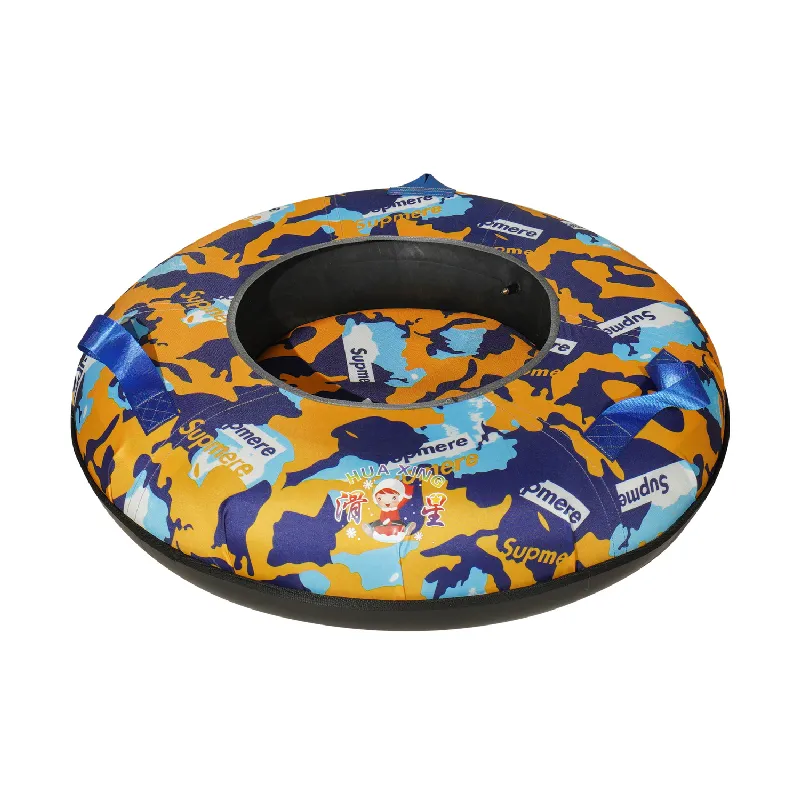
In an age of personalization and social media, even the simple snow sled has become a canvas for self-expression. The novelty PVC snow tube category has exploded in popularity, transforming the sledding hill into a colorful parade of fantastical creatures, pop culture icons, and vibrant designs. These sleds, like the GoFloats Winter Snow Tubes in shapes like a "Flying Flamingo" or a "Unicorn," prioritize aesthetics and fun over pure performance. They demonstrate that for many, the joy of sledding is not just about the ride itself, but also about the style in which you do it. The rise of this category also speaks to a growing market for customized and themed winter gear, both for individual consumers and for commercial operations like resorts and event planners.
The Rise of Personalization: From Logos to Flamingos
The appeal of a novelty sled is immediate and visual. A child riding a giant inflatable unicorn or a teenager on a tube shaped like a slice of pizza brings an element of humor and personality to the slopes. These designs are inherently shareable, perfect for photos and videos that capture the fun of a winter day. GoFloats has built a brand around this concept, offering a range of whimsical designs that stand out from a sea of generic red and blue sleds .
Beyond individual consumer choices, this trend towards customization has opened up significant opportunities for businesses. The search results from sourcing platforms like Accio show a vast market for OEM/ODM (Original Equipment Manufacturer/Original Design Manufacturer) snow tubes . Ski resorts can order tubes with their own logos, creating a cohesive brand experience. Companies can create themed tubes for holiday promotions or corporate events. This level of personalization allows businesses to use sleds as a marketing tool or a unique product offering. For anyone looking to source unique winter products, suppliers offering a wide range of customizable heavy-duty snow tubes provide the flexibility to create virtually any design imaginable. This ability to tailor a product to a specific theme or brand is a powerful driver of the novelty sled market.
| Material Feature | Heavy-Duty PVC (0.6mm+) | Standard PVC (0.4mm) | High-Density Polyethylene (HDPE) | 600D Oxford Fabric w/ Rubber |
|---|---|---|---|---|
| Abrasion Resistance | Good | Fair | Excellent | Superior |
| Cold-Crack Resistance | Good (with additives) | Poor-Fair | Excellent | Superior |
| Puncture Resistance | Good | Fair | N/A (Solid) | Superior |
| Friction Coefficient | Low | Low | Very Low | Low (on hard bottom) |
| Customization Potential | Very High (Printing) | High | Low (Molded Color) | High (Printing on Canvas) |
| Cost | Moderate | Low | Low-Moderate | High |
Understanding PVC: Thickness, Seams, and Cold Resistance
While aesthetics are the main draw, the quality of a PVC snow tube is determined by its construction. The most critical specification is the thickness of the PVC material, measured in millimeters. Standard, inexpensive pool toys might use PVC that is 0.25mm thick. A quality snow tube, however, needs to be much more robust. Look for a thickness of at least 0.4mm for general use. For greater durability, especially for adults or use on rougher terrain, a thickness of 0.6mm or even 0.8mm is preferable, as highlighted in supplier specifications for heavy-duty models. A thicker material is simply more resistant to punctures and abrasions.
The construction of the seams is equally important. Welded seams, which use heat to fuse the PVC panels together, are generally stronger and more durable than glued seams. A double-locking or "Boston" valve is also a sign of a quality tube. This type of valve has a one-way flap for easy inflation and a second, wider opening for rapid deflation. Perhaps most importantly for a snow tube, the PVC must be treated to be cold-resistant. Standard PVC can become brittle and crack at low temperatures. Manufacturers of quality snow tubes use a special PVC formulation with added plasticizers that allow it to remain flexible and durable even in freezing conditions (Wypych, 2012). This is a crucial safety and longevity feature that distinguishes a true snow tube from a summer pool float. Companies specializing in winter recreation equipment, such as those offering a diverse snow tube selection, understand the importance of using the correct grade of cold-weather PVC.
Sourcing for Fun or Business: OEM/ODM Possibilities
The novelty tube market is a clear indicator of the demand for unique winter sports equipment. For entrepreneurs or businesses like ski resorts, rental shops, or event companies, the ability to source custom-designed sleds offers a competitive advantage. The process typically involves working with an OEM/ODM supplier. An OEM (Original Equipment Manufacturer) produces a product according to a design provided by the client, while an ODM (Original Design Manufacturer) offers existing product designs that can be branded and customized by the client.
The search results for novelty snow tubes reveal a mature supply chain for this market, with manufacturers offering customization of size, color, printing, logos, and even packaging. Minimum Order Quantities (MOQs) can range from a few hundred to several thousand units, allowing for both small and large-scale projects. When engaging with a supplier, it is vital to specify the technical requirements discussed above: PVC thickness, cold-resistance, seam type, and handle construction. Requesting and testing samples is a critical step to verify the quality before committing to a large order. By leveraging these manufacturing capabilities, a business can create a unique product that perfectly aligns with its brand identity or event theme, turning a simple sled into a memorable experience for its customers.
Frequently Asked Questions (FAQ)
What material makes a sled the fastest?
The speed of a sled is primarily determined by minimizing friction between the sled's base and the snow. The fastest materials are typically hard, smooth, non-porous polymers. High-density polyethylene (HDPE), used in many plastic toboggans and saucers, is very fast. However, the top speeds are often achieved by commercial-grade snow tubes that feature a slick polypropylene (PP) or specially laminated hard PVC bottom. These materials are designed to glide on top of the snow and take advantage of pressure-melting to create a lubricating layer of water, drastically reducing friction.
Are inflatable snow tubes safer than hard plastic sleds?
Safety is complex and depends more on the sled's design, the terrain, and user behavior than the material alone. Inflatable tubes offer more cushioning, which can absorb some impact from bumps. However, they typically offer very little steering control, which can be a safety hazard on crowded or obstructed hills. Hard plastic sleds, particularly toboggans, often provide better directional control, allowing riders to steer away from dangers. Ultimately, a sled with good handles, a stable design, and some method of steering, used on an appropriate hill, will be safer regardless of whether it is inflatable or plastic.
How do I choose the right size sled for my family?
Choosing the right size involves considering the riders' age, size, and how you intend to use the sled. For young children, a small, lightweight saucer or single-person toboggan is ideal as they can manage it themselves. For an adult or for a parent wanting to ride with a child, a larger single sled with a high weight capacity (over 250 lbs) or a designated two-person toboggan or snow tube is necessary. Always check the manufacturer's recommended weight and age limits. A sled that is too small can be unstable, while one that is too large may be difficult for a smaller rider to control.
What is the most durable type of sled?
Durability depends on material quality and construction. The most durable sleds on the consumer market are typically the commercial-grade snow tubes. These feature a heavy-duty rubber inner tube protected by a thick, high-denier (600D or higher) canvas or Oxford fabric cover and a hard polymer bottom. This multi-layer construction is highly resistant to punctures, abrasions, and the stress of frequent use. A well-made traditional wooden toboggan can also be extremely durable, often lasting for generations with proper care.
Can I use a river tube or pool float for sledding?
It is strongly advised not to use a river tube or pool float for sledding. These products are made from standard PVC that is not formulated for cold temperatures. In freezing weather, this plastic can become extremely brittle and is highly susceptible to cracking or shattering upon impact, which can be dangerous. True snow tubes are made from special cold-resistant PVC or have a durable fabric cover over a rubber tube, designed specifically to remain flexible and intact in winter conditions.
Conclusion
The journey through the landscape of modern sledding reveals that the "best" sled is not a single product but a category of design that aligns with a specific human desire for winter play. The selection in 2025 is rich with innovation, offering distinct choices for every type of enthusiast. For those who chase the pure adrenaline of speed, the commercial-grade hard-bottom tube offers a thrilling, near-frictionless glide, engineered for both velocity and resilience. For the adventurer who sees the entire winter landscape as a potential playground, the wearable foam sled provides unparalleled portability, integrating the joy of sliding into the very fabric of a winter hike.
For families seeking to create shared memories, the classic multi-person toboggan remains the vessel of communal laughter, offering stability and control for precious cargo. The humble plastic saucer continues to deliver dizzying, chaotic fun at an accessible price point, serving as the perfect introduction to the magic of a snow day. Finally, the novelty PVC tube allows for vibrant self-expression, turning the sledding hill into a stage for personality and customized fun. The ideal choice depends not on a simple ranking, but on a thoughtful consideration of one's own priorities: speed, convenience, community, simplicity, or style. By understanding the science, materials, and design philosophy behind each type, every individual can find their perfect vehicle for embracing the simple, profound joy of sliding down a snowy hill.
References
Kietzig, A. M., Hatzikiriakos, S. G., & Englezos, P. (2010). The physics of snow friction. Journal of Applied Physics, 107(8), 081101. https://doi.org/10.1063/1.3340792
Peacock, A. J. (2000). Handbook of polyethylene: Structures, properties, and applications. CRC Press.
Wypych, G. (2012). PVC degradation and stabilization. ChemTec Publishing.
Accio. (2025). Novelty design snow tubes. Retrieved from
Goplus. (2024). Goplus heavy duty snow tube for sledding. Retrieved from
GoSports. (2025). Snow sports. Retrieved from
Snowfeet*. (2025). *Assled – Wearable foldable snow sled for adults and kids*. Retrieved from
Snowfeet*. (2022). *The ultimate guide to the best snow sleds for adults and children*. Retrieved from https://www.snowfeetstore.com/it/blogs/snowfeetskiskatesskiboardssnowbladesskibladesminiskisshortskis/the-ultimate-guide-to-the-best-snow-sleds-for-adults-and-children
Tube Pro Inc. (2025). Snow tubes & river tubes. Retrieved from
Made-in-China.com. (2025). PVC snow tubes float for winter outdoor sledding. Retrieved from