





Avoid Buyer’s Remorse: An Expert 5-Point Checklist for Snow Sledding Equipment: Sports & Outdoors in 2026
December 31, 2025
Abstract
This analysis provides a comprehensive examination of snow sledding equipment within the sports and outdoors market, current as of 2026. It investigates the fundamental properties of materials commonly used in manufacturing, including polyvinyl chloride (PVC), high-density polyethylene (HDPE), and foam, evaluating their respective impacts on durability, performance, and user safety. The discourse extends to a typology of sled designs—such as snow tubes, toboggans, and saucers—correlating their physical forms with functional outcomes like speed, steerability, and stability. A critical component of this exploration is the role of safety features, from handle construction to braking mechanisms, situated within the broader context of responsible use and environmental awareness. The document further considers user-specific factors, offering guidance for selecting appropriate equipment based on age, intended application (recreational versus commercial), and typical snow conditions. By synthesizing technical specifications, performance metrics, and maintenance protocols, this work aims to furnish consumers and commercial operators with a robust framework for making informed purchasing decisions regarding snow sledding equipment.
Key Takeaways
- Material choice—PVC, HDPE, foam—directly dictates sled durability, speed, and safety.
- Match the sled design (tube, toboggan, saucer) to your desired experience and hill conditions.
- Prioritize safety features like reinforced handles, weight limits, and bright, visible colors.
- Consider the age and experience of the user when selecting appropriate snow sledding equipment.
- Proper care, including cleaning and off-season storage, significantly extends equipment lifespan.
- For commercial venues, investing in heavy-duty, hard-bottom tubes is a long-term value decision.
- Understand local conditions; powder and packed snow may require different sled types for optimal performance.
Table of Contents
- 1. Material and Durability: The Foundation of a Great Sled
- 2. Design and Performance: Matching the Sled to the Slope
- 3. Safety Features: A Non-Negotiable Aspect of Winter Fun
- 4. User-Specific Considerations: Selecting for Age, Use, and Location
- 5. Care and Maintenance: Extending the Life of Your Equipment
- Frequently Asked Questions (FAQ)
- Conclusion
- References
1. Material and Durability: The Foundation of a Great Sled
The object in your hands, whether a vibrant inflatable tube or a sleek plastic toboggan, is more than just a tool for winter amusement. It is the culmination of material science, engineering choices, and a deep, often unspoken, understanding of physics. The sensation of gliding over snow is a dialogue between the sled's surface and the crystalline structure of the ice beneath it. Therefore, our first point of examination must be the very substance from which these objects are made. A sled’s capacity for joy is inextricably linked to its capacity for endurance. To choose a piece of snow sledding equipment is to place your trust in its material integrity. This trust should not be blind; it ought to be informed by a clear-eyed assessment of the properties, strengths, and inherent limitations of its constituent materials.
Understanding PVC: The Workhorse of Inflatable Sleds
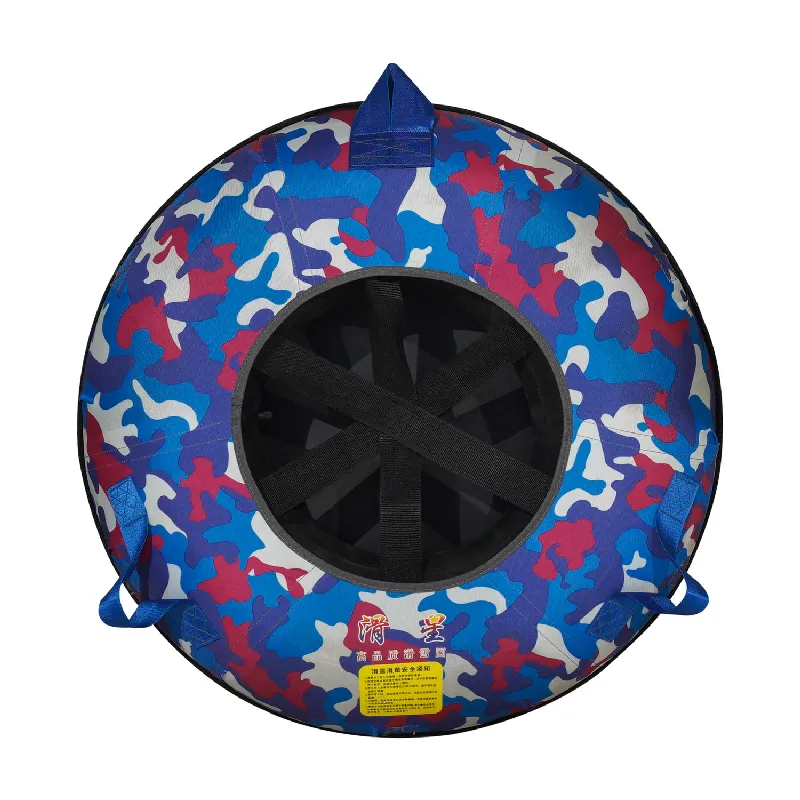
Polyvinyl chloride, or PVC, is the dominant material in the world of inflatable snow tubes, and for good reason. Its versatility is remarkable. At its core, PVC is a rigid polymer, but through the addition of plasticizers, it can be rendered soft and pliable, perfect for a product that needs to be inflated, ridden, and then compactly stored. Think of it like adding water to clay; the fundamental substance remains, but its workability is transformed.
The quality of a PVC snow tube hinges on two primary factors: its thickness, often measured in gauge or millimeters, and its formulation to resist cold. A standard recreational snow tube might use PVC with a thickness of 0.4mm to 0.6mm. This is generally adequate for casual backyard use on smooth, well-covered hills. However, for those seeking greater longevity or intending to use the tube on more varied terrain, a heavier gauge is preferable. Premium and heavy-duty snow tubes often feature PVC of 0.8mm or even thicker, particularly on the bottom surface where the most abrasion occurs. This increased thickness acts as a buffer, a more robust shield against the unseen sticks, rocks, or ice patches that can end a day of fun prematurely.
Equally vital is the PVC’s ability to withstand low temperatures. Unmodified PVC can become brittle and fracture in the cold, a phenomenon known as cold crack. Manufacturers combat this by incorporating special additives into the PVC formula. These additives disrupt the polymer chains from packing too tightly together at low temperatures, preserving the material's flexibility. When you see a product advertised with a "cold-crack additive" or a specific low-temperature rating (e.g., down to -25°C or -13°F), it signifies an important, deliberate engineering choice to enhance the product's resilience in its intended environment. The seams of a PVC tube are its Achilles' heel. The most durable tubes employ radio-frequency (RF) welding, which uses electromagnetic energy to fuse the PVC panels together at a molecular level, creating a bond that is often stronger than the material itself.
The Rigidity of Polyethylene: Hard Sleds and Saucers
Where PVC offers flexible, inflatable fun, polyethylene provides rigid, reliable speed. High-density polyethylene (HDPE) is the material of choice for most classic plastic toboggans, saucers, and many modern steerable sleds. Unlike the inflatable nature of PVC tubes, HDPE sleds are defined by their unyielding form. This rigidity allows for a different kind of interaction with the snow.
Imagine a boat's hull. A well-designed hull cuts through the water with minimal resistance. Similarly, an HDPE sled is designed to glide on top of the snow. Its smooth, non-porous surface minimizes friction, which is the primary force slowing you down. Manufacturers often boast of a "diamond-polished" or "slick-coated" bottom. While some of this is marketing language, the underlying principle is sound: the smoother the surface, the faster the ride. HDPE is also inherently durable and resistant to impact, even at low temperatures. It can absorb the shock of bumps and impacts without shattering, bending where a more brittle plastic might break. This makes it an exceptionally reliable material for multi-season use.
The design of an HDPE sled also allows for features impossible in an inflatable. Molded runners, which are long, narrow grooves on the bottom of the sled, can enhance directional stability, much like the keel of a boat. This helps the sled track straighter, reducing the wild, unpredictable spinning characteristic of saucer sleds. The material's rigidity also enables the integration of steering mechanisms and brakes, transforming a simple gravity-powered ride into a more controlled descent.
Comparison of Common Sled Types
| Feature | Snow Tube | Toboggan | Saucer | Foam Sled |
|---|---|---|---|---|
| Primary Material | PVC, often with a fabric cover and hard bottom option | High-Density Polyethylene (HDPE), Wood | HDPE | PE foam core with a slick plastic bottom |
| Performance | High speed, often spins, cushioned ride | Good speed, directional stability, can hold multiple riders | High speed, spins uncontrollably, lightweight | Very fast, lightweight, some directional control |
| Control | Low (leaning helps) | Moderate to High (some have steering/brakes) | Very Low | Low to Moderate (can be steered by shifting weight) |
| Best For | Thrill-seekers, cushioned ride on bumpy hills | Families, group sledding, controlled descents | Solo riders, open and smooth hills | Racing, easy transport, younger children |
| Pros | Cushioned, fast, fun spinning motion, storable | Durable, seats multiple people, often steerable | Lightweight, simple, very fast on packed snow | Lightweight, fast, provides some padding |
| Cons | Prone to punctures, little steering control | Bulky to store and transport, hard surface | No control, can be dangerous on crowded hills | Less durable than hard plastic, can tear |
The Cushion of Foam Sleds: Lightweight Speed
Positioned between the inflatable tube and the hard plastic sled is the foam sled. These sleds typically consist of a lightweight polyethylene (PE) foam core sandwiched between a durable top layer and a super-slick plastic bottom, often made of HDPE. The appeal of the foam sled lies in its combination of speed and comfort.
The foam core provides a layer of cushioning that hard plastic sleds lack, absorbing some of the shocks from bumpy terrain. This can make for a more comfortable ride, especially for younger or more sensitive riders. At the same time, the slick HDPE bottom ensures that this comfort does not come at the expense of speed. In fact, because they are so lightweight, foam sleds can be exceptionally fast, accelerating quickly even on gentle slopes. Their design, often resembling a small bodyboard, allows riders to lie down, which reduces wind resistance and further enhances speed.
However, the layered construction of foam sleds can also be a point of weakness. While more resistant to punctures than an inflatable tube, the foam core can be gouged or torn if it hits a sharp object. The seams where the top and bottom layers are joined can also peel or separate over time with rough use. They represent a middle ground, offering a unique blend of features but perhaps not the sheer robustness of a single-piece HDPE sled or a commercial-grade snow tube.
The Classic Appeal: Wood and Metal Construction
Before the age of polymers, sleds were crafted from wood and metal. The classic toboggan, with its curved front and long wooden slats, and the "Flexible Flyer" style sled, with its wooden deck and steel runners, evoke a sense of nostalgia. These materials offer a different kind of durability. A well-cared-for wooden sled can last for generations, becoming a family heirloom.
The performance is also distinct. Steel runners present a very small surface area to the snow, which, under the right conditions (cold, hard-packed snow or ice), can lead to incredibly high speeds by minimizing friction. The runners also provide excellent tracking, allowing for a straight and controlled descent. Steering is typically achieved by dragging a foot or pulling on the crossbar, a more direct and physical method than the subtle weight-shifting of modern sleds.
However, these classic designs have their drawbacks in the modern context. They are heavy and cumbersome to carry back up the hill. The steel runners can be dangerous in a collision and are unsuitable for shallow or powdery snow, where they tend to sink rather than glide. Their construction makes them significantly more expensive than their plastic counterparts. While they hold a cherished place in the history of snow sledding equipment, their practical use today is often reserved for enthusiasts or those with a penchant for tradition.
Commercial-Grade vs. Recreational: What the Difference Means for You
When browsing for a snow tube, you may encounter the term "commercial-grade." This is not merely a marketing buzzword; it signifies a substantial difference in construction and materials, designed to withstand the rigors of daily use at a ski resort or tubing park. Many dedicated snow tube suppliers specialize in these robust models.
A commercial-grade snow tube typically features an inner tube made from industrial tire rubber, the same kind used in large vehicle tires. This is then encased in a heavy-duty fabric cover, often made of thick nylon or vinyl, which is highly resistant to abrasion and punctures. The most critical component is the bottom. Instead of a simple PVC layer, commercial tubes have a hard, slick polyethylene shell. This hard bottom serves two purposes: it provides a super-fast sliding surface, and it protects the inner tube from any and all terrain imperfections. The handles are not just sewn on but are made of reinforced webbing that is double- or triple-stitched through multiple layers of the cover.
For a family, is a commercial-grade tube worth the significant extra cost? If you live in an area with frequent, heavy snowfall and have a family of avid sledders, the investment could pay off over several years. It offers unparalleled durability and peace of mind. For the average family that sleds a few times a year, a high-quality recreational tube with a heavy-gauge PVC bottom will likely suffice. Understanding the distinction, however, allows you to make a choice that aligns with your budget and your expected level of use.
2. Design and Performance: Matching the Sled to the Slope
The material of a sled sets the stage, but its design choreographs the performance. The shape, size, and features of a piece of snow sledding equipment are not arbitrary; they are the result of deliberate choices aimed at producing a specific kind of experience. A sled designed for a straight, fast descent is fundamentally different from one built for spinning, whimsical fun. The interaction between a sled's design and the snow is a complex dance of physics, involving friction, gravity, and aerodynamics. To select the right sled, one must first envision the desired performance and then identify the design that will bring that vision to life on the snowy canvas of a hillside. It is about matching the tool not just to the user, but to the task at hand—the specific brand of winter joy you wish to pursue.
The Thrill of Snow Tubes: Speed, Spin, and Stability
The snow tube is arguably the modern icon of recreational sledding. Its simple, circular design belies a sophisticated relationship with physics that makes it both thrilling and forgiving. A snow tube's primary performance characteristic is its tendency to spin. Because it is perfectly symmetrical and lacks any directional runners, any slight imbalance in rider weight or unevenness in the snow can initiate a rotation. This spinning, often unpredictable, is a core part of the tube's appeal. It adds a dizzying, exhilarating dimension to the descent that a straight-running toboggan cannot replicate.
The speed of a snow tube comes from its large, smooth surface area, which distributes the rider's weight and allows it to "float" over the snow, minimizing friction. Inflatable tubes with slick PVC bottoms are fast, but those with integrated hard plastic bottoms are even faster, combining the low friction of HDPE with the cushioning of an inflatable. This cushioned ride is another key performance benefit. The air-filled chamber acts as a natural shock absorber, smoothing out bumps and moguls that would be jarring on a hard plastic sled. This makes tubing a more comfortable experience, particularly on ungroomed or rough terrain.
The wide base of a snow tube also gives it a low center of gravity, making it exceptionally stable. It is very difficult to flip a snow tube, which adds a layer of safety to its high-speed antics. While it offers little in the way of steering—controlled mostly by leaning one's body—its inherent stability and cushioned ride make it a popular choice for all ages.
The Directional Control of Toboggans and Steerable Sleds
In contrast to the freewheeling nature of a snow tube, the toboggan is a paragon of directional purpose. The traditional long, narrow design is inherently stable in a straight line. Many modern plastic toboggans incorporate molded runners on the underside. These runners function like the fins on a surfboard or the keel of a boat, cutting a small track in the snow and resisting lateral movement. This helps the toboggan maintain its heading and prevents the kind of spinning seen with saucers and tubes. The ability to accommodate multiple riders, seated one behind the other, further increases its mass and momentum, contributing to a straight, powerful descent.
Taking this concept a step further are steerable sleds. These more complex devices, often made from durable HDPE, incorporate a genuine steering mechanism. This is typically a set of front skis that can be turned via a steering wheel or handles. Some models also include a hand-operated brake, which is usually a set of metal claws that dig into the snow to slow the sled down. These features transform sledding from a passive, gravity-fueled ride into an active, controlled sport. The rider can now choose their path, weaving around obstacles or other sledders. Sleds like the Kettler Snow Future or Snow Fox, as seen on retail sites like , exemplify this category of high-performance, controllable sleds. This level of control requires a higher degree of skill but offers a more engaging and potentially safer experience on crowded or complex slopes.
The Unpredictable Fun of Saucers
The snow saucer is the agent of chaos in the world of snow sledding equipment. It is the simplest of designs: a circular disc of slick HDPE, often with two simple molded handles. Its performance is defined by one thing: speed, coupled with a complete lack of control. Like a snow tube, its circular shape invites spinning, but its hard, unyielding surface and smaller diameter make the spinning faster and more frantic.
A saucer has an extremely low coefficient of friction, especially on hard-packed snow. With minimal surface area in contact with the ground and a lightweight construction, it can achieve astonishing speeds very quickly. The thrill of a saucer ride comes from this raw speed and the feeling of being completely at the mercy of gravity and the contours of the hill. There is no pretense of steering; the handles are there simply to help the rider hold on. This makes the saucer an exhilarating ride on wide-open, obstacle-free hills. However, this same lack of control makes it a poor choice for wooded trails, crowded slopes, or icy conditions where the inability to steer or stop can have serious consequences. The saucer offers the purest, most unfiltered sledding experience, a direct and wild conversation with the force of gravity.
Sled Material Performance Characteristics
| Material | Key Performance Trait | Durability Profile | Common Sled Type | Ideal Snow Condition |
|---|---|---|---|---|
| Heavy-Gauge PVC | Cushioned ride, moderate speed | Good; resistant to cold crack but can puncture | Inflatable Snow Tubes | All-purpose, especially bumpy terrain |
| HDPE (High-Density Polyethylene) | Very high speed, low friction | Excellent; impact-resistant and durable | Toboggans, Saucers, Steerable Sleds | Packed snow, groomed hills |
| PE Foam Core with HDPE Bottom | Lightweight, very fast acceleration | Fair; can be torn or gouged, seams can separate | Foam Sleds / Bodyboards | Fresh powder or packed snow |
| Hard Plastic Bottom (on tubes) | Extreme speed, low friction | Superior; protects inner tube from all terrain | Commercial / Heavy-Duty Snow Tubes | Any, especially rough or icy terrain |
| Wood with Steel Runners | Very high speed on ice, excellent tracking | Excellent; can last for generations with care | Classic "Flexible Flyer" Sleds | Hard-packed snow or ice |
Aerodynamics and Bottom Surfaces: What Makes a Sled Fast?
The speed of a sled is governed by a simple equation: gravity pulling you down the hill versus friction and air resistance holding you back. To go faster, you must either increase the pull of gravity (by finding a steeper hill) or decrease the forces of resistance. Sled design is almost entirely focused on the latter.
Friction is the primary opponent. The type of friction at play is complex, involving not just the sliding of one surface over another but also the generation of a thin layer of meltwater upon which the sled actually glides (Kietzig et al., 2010). Sled designers minimize friction in several ways. First, through material choice. Smooth, non-porous materials like HDPE have a very low coefficient of friction against snow. Second, through surface design. "Diamond-polished" bottoms, slick coatings, and even waxing the bottom of a sled (a trick borrowed from skiing) can further reduce this friction. Third, through shape. Runners on a toboggan or skis on a steerable sled reduce the contact area, which can decrease friction under certain conditions, particularly on hard ice.
Air resistance, or drag, becomes a significant factor at higher speeds. A rider sitting upright on a sled presents a large surface area to the wind, creating drag. This is why lying down on a foam sled or a toboggan feels faster—it reduces your aerodynamic profile. The sleek, low-profile designs of many modern steerable sleds are not just for aesthetics; they are also meant to be more aerodynamic, cutting through the air with less resistance. While not as critical as the sled-snow interface, aerodynamics plays a tangible role in achieving maximum velocity on a long, fast run.
Multi-Person Sleds: Sharing the Winter Joy
Sledding is often a social activity, and many sled designs reflect this. The classic toboggan is the original multi-person sled, its long body capable of holding a whole family. The fun of a toboggan is communal; the shared thrill, the coordinated leaning into turns, the collective shout of joy. The increased mass of multiple riders also gives the toboggan more momentum, helping it power through patches of deeper snow and maintain its speed on flatter sections.
In recent years, multi-person snow tubes have become increasingly popular. These are often larger, oblong, or figure-eight shaped inflatables designed to accommodate two or even three riders. Products like the Slippery Racer AirDual or the Sportsstuff Kaleidoslope, found on specialty sites like , cater to this desire for shared fun. They combine the cushioned ride and stability of a solo tube with the social aspect of a toboggan. These designs often feature multiple sets of handles so each rider has a secure grip. Sharing a sled is not just about logistics; it changes the nature of the experience, turning a solitary thrill into a collective memory. It requires a degree of cooperation and trust, as the riders must work together, shifting their weight in unison to navigate the slope.
3. Safety Features: A Non-Negotiable Aspect of Winter Fun
In the pursuit of winter exhilaration, it is easy to overlook the profound responsibility that accompanies it. The act of sledding is an exercise in controlled risk, and the equipment we choose is our primary means of managing that risk. To discuss safety features is not to diminish the thrill, but to ensure its sustainability. An injury not only ends a day of fun but can cast a long shadow over future enjoyment. Therefore, an intelligent appraisal of snow sledding equipment must place an uncompromising emphasis on the features designed to protect the rider. These are not mere add-ons or luxuries; they are fundamental components of a well-designed product, reflecting an ethical commitment by the manufacturer to the well-being of the user. From the grip of a handle to the efficacy of a brake, these features are the silent guardians of our winter joy.
The Importance of Strong, Well-Placed Handles
On any sled, regardless of type, the handles are the primary point of connection between the rider and the vessel. They are what you cling to when the speed picks up and the bumps begin. Their quality and placement are of paramount importance. On inflatable snow tubes, look for handles made of sturdy, reinforced webbing or molded PVC. They should be securely attached, preferably with double or triple stitching that passes through multiple layers of the tube's cover. The best designs feature oversized handles that can be easily gripped even with bulky winter gloves. Poorly attached handles can tear off during a ride, leading to a sudden loss of stability and control when it is needed most.
On hard plastic sleds like toboggans and saucers, the handles are typically molded into the body of the sled. It is crucial to inspect these for any signs of stress or cracking. The design should allow for a secure grip without exposing the rider's knuckles to abrasion against the snow. The placement is also critical. Handles should be positioned to help the rider maintain balance and absorb shocks with their arms. For multi-person sleds, it is imperative that there is a dedicated set of secure handles for each rider. A handle is more than a convenience; it is a lifeline.
Braking and Steering Systems: Gaining Control
While the classic sledding experience is a pure surrender to gravity, the introduction of braking and steering systems represents a significant leap forward in safety. These features are most common on advanced, steerable sleds made from HDPE. Steering, as discussed previously, allows the rider to actively choose their path, which is the most effective way to avoid collisions with trees, rocks, other people, or any other hazard. A responsive steering system, controlled by a wheel or handlebars, gives the rider agency, transforming them from a passenger into a pilot.
Braking systems provide another layer of active safety. Typically, these consist of one or two levers that, when pulled, engage metal or hard plastic claws that dig into the snow. This creates a significant amount of friction, slowing the sled down rapidly. It is important to understand that these brakes are most effective on packed snow and may be less so in deep powder or on sheer ice. They are not as instantaneous as bicycle brakes and require some anticipation on the part of the rider. Nonetheless, the ability to scrub off speed before a turn or to come to a controlled stop at the bottom of the hill is an invaluable safety feature. For parents considering a sled for their children, or for anyone planning to sled on anything other than a wide-open, gentle slope, a sled with effective steering and brakes should be a primary consideration.
Rider Capacity and Weight Limits: Respecting the Boundaries
Every piece of snow sledding equipment is designed and tested to perform safely within a specific set of parameters. Among the most critical of these are the rider capacity and the maximum weight limit. These numbers, usually printed directly on the sled or its packaging, are not suggestions; they are strict safety warnings based on the structural integrity of the product.
Exceeding the weight limit can lead to catastrophic failure. On an inflatable tube, it can cause the seams to burst. On a hard plastic sled, it can cause the material to crack or shatter, especially upon impact with a bump. Overloading a sled also drastically alters its performance characteristics. It will sit lower in the snow, potentially increasing friction, and its steering and braking systems, if present, may not function as designed under the excess load. A one-person sled should only ever be used by one person. A toboggan rated for 250 pounds should not be loaded with three adults weighing a combined 500 pounds. Adherence to these limits is a simple yet profound act of responsibility, ensuring the equipment can perform its function as the manufacturer intended.
Visibility: The Role of Bright Colors
In the often monochromatic landscape of a snowy day, visibility is safety. A sled, especially a fast-moving one, should be easily seen by other people on the hill, including other sledders, skiers, and pedestrians. This is why so much snow sledding equipment is produced in bright, vibrant colors like neon green, orange, red, and blue. A brightly colored sled stands out against the white snow, giving everyone around it more time to react. This is particularly important in the low-light conditions of late afternoon or on overcast days.
The same principle applies to the rider's clothing. Brightly colored jackets, hats, and pants make the rider more visible to others, reducing the risk of collisions. When choosing a sled, opting for a bright color is a simple, passive safety measure that costs nothing but can make a significant difference in a crowded environment. A dark or camouflage-colored sled might look sleek, but it disappears against the backdrop of snow and shadows, creating an unnecessary risk.
Choosing a Safe Sledding Environment
The safest sled in the world can become dangerous in an unsafe environment. The final, and perhaps most important, aspect of sledding safety lies in the choice of location. An ideal sledding hill has several key characteristics. It should have a long, flat run-off area at the bottom, free from hazards like roads, parking lots, fences, ponds, or rivers. The slope itself should be free of obstacles such as trees, rocks, and bare patches. The hill should not be too steep, as excessive speed is a major contributor to injuries.
It is also crucial to be aware of others. The hill should be used exclusively for sledding, not shared with skiers or snowboarders whose speed and movement patterns are different and unpredictable. Riders should walk up the sides of the hill, leaving the center clear for those coming down. Before starting a descent, one should always ensure the path ahead is clear. Sledding with a designated spotter at the top and bottom of the hill can add another layer of safety. The equipment is only one part of the safety equation; situational awareness and good judgment are equally vital.
4. User-Specific Considerations: Selecting for Age, Use, and Location
The concept of a "one-size-fits-all" sled is a fallacy. The ideal piece of snow sledding equipment is not an absolute but is relative to the specific context of its use. The needs of a small child on their first snow day are vastly different from those of a teenager seeking high-speed thrills, which are different again from the requirements of a commercial tubing park operator. Furthermore, the very nature of the snow itself—be it the light, fluffy powder of the Rockies or the wet, heavy snow of a coastal region—dictates which designs will perform best. A truly informed choice requires a moment of introspection, an assessment of who will be using the sled, for what purpose, and in what environment. This empathetic consideration of the user and their context is the bridge between simply buying a product and acquiring the right tool for the job.
Sleds for Young Children: Stability and Safety First
When selecting a sled for a toddler or young child, the primary virtues are stability, security, and gentle performance. Speed and thrill-seeking are secondary to providing a safe and positive introduction to winter fun. For the very youngest, a pull sled is often the best choice. These are typically molded plastic toboggans with high sides, a raised backrest, and a safety strap to keep the child securely seated. They are not designed for downhill sliding but for being gently pulled along flat ground by a parent, allowing the child to enjoy the snow without the risks of a slope.
Once a child is ready for a gentle slope, stability remains key. A wide-based snow tube or a small, wide toboggan is an excellent choice. The low center of gravity makes them very difficult to tip over. Look for sleds with deep seating areas and prominent, easy-to-grip handles that the child can hold onto securely. Speed should be moderate. A sled with a less slick bottom or a design that creates more friction can be a benefit, preventing the child from reaching intimidating speeds. Some sleds designed for children even come with features like an integrated seatbelt. The goal is to build confidence and associate sledding with security and joy, not fear.
Sleds for Teens and Adults: Durability for Thrill-Seekers
As riders get older, their priorities often shift towards speed and performance. Teenagers and adults are more likely to test the limits of their equipment, seeking out steeper hills and faster rides. For this demographic, durability becomes paramount. The equipment must be robust enough to handle higher speeds, greater impacts, and the heavier weight of an adult rider.
A high-quality, heavy-gauge PVC snow tube is an excellent option. Its cushioned ride absorbs bumps, and its spinning motion provides a unique thrill. For even greater durability and speed, a tube with a hard plastic bottom is a worthy investment. These are designed to withstand the punishment that adult riders can dish out. Steerable sleds are also a fantastic choice for this age group. The ability to control the descent adds a layer of skill and engagement that many adults appreciate. A well-built HDPE steerable sled with metal runners and an effective braking system can provide years of high-performance fun. Finally, for pure, unadulterated speed on open hills, the classic saucer remains a favorite. Its simplicity and raw performance appeal to the thrill-seeker in many adults. The key is to match the choice to the rider's desire for control versus chaos.
Commercial Use: Investing in Heavy-Duty Equipment
For a business, such as a ski resort, winter park, or rental operation, snow sledding equipment is not a toy; it is a capital investment. The primary considerations are durability, safety, and return on investment. The equipment will be used hundreds or thousands of times in a single season by a wide range of users, and it must be able to withstand this constant, heavy use.
In this context, there is no substitute for commercial-grade snow tubes. As detailed earlier, these products are in a different class of construction. The combination of a heavy-duty rubber inner tube, a thick vinyl or nylon cover, and a slick, hard polyethylene bottom is the only formula that can reliably endure a commercial season. The initial cost is significantly higher than for a recreational tube, but the longevity and reduced need for replacement make them more cost-effective in the long run. The enhanced safety features, such as super-reinforced handles and robust construction, also reduce liability and enhance the customer experience. For any enterprise that provides tubes to the public, investing in purpose-built commercial equipment is the only responsible and financially sound decision.
Regional Considerations: Packed Snow vs. Fresh Powder
The condition of the snow has a profound impact on how a sled performs. A sled that flies on hard-packed snow might bog down and sink in deep powder. Understanding your local snow conditions is crucial to selecting equipment that will perform well.
In regions that receive frequent, light, fluffy powder, such as the Rocky Mountains or parts of Northern Europe, a sled with a larger surface area is needed. This is a principle of flotation. A larger footprint distributes the rider's weight over a wider area, helping the sled stay on top of the powder rather than plowing through it. Wide toboggans, large-diameter snow tubes, and foam bodyboard-style sleds all perform well in these conditions. Sleds with narrow steel runners, like the classic Flexible Flyer, are a poor choice for deep powder as the runners will simply sink, bringing the ride to a halt.
Conversely, in regions with wetter, heavier snow or in areas where hills become quickly packed down from heavy use, speed is achieved by minimizing friction. Hard, slick surfaces are ideal. HDPE saucers and toboggans, and especially tubes with hard plastic bottoms, excel on packed snow. The hard surface allows them to glide effortlessly on the thin layer of meltwater that forms under pressure. Steel runners also perform exceptionally well on hard-packed or icy surfaces, offering minimal friction and maximum speed. Choosing a sled that is well-suited to the typical snow in your area will ensure more consistent performance and a more enjoyable experience throughout the winter.
5. Care and Maintenance: Extending the Life of Your Equipment
The relationship with your snow sledding equipment does not end when you purchase it; it is an ongoing commitment. Like any tool, a sled requires care and attention to perform at its best and to last for its intended lifespan. The forces of friction, impact, and extreme temperatures, combined with the inevitable exposure to moisture and sunlight, all take their toll. A few simple practices of care and maintenance can dramatically extend the life of your equipment, protecting your investment and ensuring it is safe and ready for the first snowfall of every new season. This stewardship is not a chore but an integral part of the sledding experience, a quiet ritual that honors the joy the equipment provides.
Proper Inflation and Deflation of Snow Tubes
For inflatable snow tubes, proper inflation is critical to both performance and longevity. An under-inflated tube will be sluggish and unresponsive. It will sag in the middle, creating more surface area and friction with the snow, which slows it down. It also places undue stress on the seams and the material, as the tube flexes and folds in ways it was not designed to.
Conversely, over-inflating a tube is equally damaging. It stretches the PVC material and puts immense strain on the welded seams. This is especially dangerous when moving from a warm indoor environment to the cold outdoors. According to the ideal gas law, the air inside the tube will contract in the cold, causing a drop in pressure. However, if you inflate it to its absolute maximum indoors and then it sits in the sun on a bright winter day, the air inside will heat up and expand, potentially bursting the seams.
The correct approach is to inflate the tube until it is firm to the touch but still has a slight amount of give when you press on it. The inner tube should fill the outer cover completely, creating a taut, smooth sliding surface. Many tubes now come with a "speed safety valve," a two-part system that allows for rapid inflation with a wide opening and easy topping-off with a one-way valve. When the day is done, fully deflating the tube before storage is essential. This relieves all pressure from the seams and allows the material to rest in a neutral state.
Cleaning and Storing Your Sleds Off-Season
When winter recedes, the temptation is to simply toss the sleds into a corner of the garage or basement until next year. This is a mistake. Proper off-season storage is crucial to preserving your equipment. Before storing any sled, it should be thoroughly cleaned and dried. Dirt, road salt, and moisture can degrade the materials over time.
For both hard plastic sleds and inflatable tubes, a simple cleaning with mild soap and water is sufficient. Be sure to rinse it thoroughly and, most importantly, allow it to dry completely. Storing a sled while it is still damp can lead to the growth of mold and mildew, which can stain the material and cause an unpleasant odor, particularly on the fabric covers of snow tubes.
Once clean and dry, the storage location matters. All plastics, including PVC and HDPE, can be damaged by prolonged exposure to ultraviolet (UV) radiation from direct sunlight. UV rays can make the plastic brittle and cause the vibrant colors to fade. Therefore, sleds should be stored indoors, in a cool, dry place away from direct sunlight. For inflatable tubes, deflating them completely, folding them loosely, and storing them in a bag or container protects them from both UV light and accidental punctures from other stored items.
Inspecting for Damage Before Each Use
Before every sledding excursion, a brief but thorough inspection should be performed. This simple habit can prevent equipment failure and potential injury. For hard plastic sleds, check the entire surface for any cracks, especially around the handles and in the seating area. Even a small crack can propagate under the stress of a ride and lead to a complete break. Check the runners for any deep gouges and ensure any steering or braking mechanisms are functioning correctly.
For inflatable snow tubes, the inspection is even more critical. Lay the inflated tube out and visually inspect the entire outer cover and bottom surface for any signs of excessive wear, abrasion, or small punctures. Pay close attention to the seams. Run your hands along them to feel for any areas that might be peeling or separating. Check the handles to ensure they are still securely attached to the cover. Finally, listen for the faint hiss of escaping air, which would indicate a slow leak. Catching a small problem during a pre-ride inspection allows you to address it before it becomes a major failure on the hill.
Patching and Repairing PVC Snow Tubes
Despite best efforts, punctures can happen. Fortunately, a small hole in a PVC snow tube does not have to be a death sentence for the product. Most high-quality snow tubes come with a simple patch kit, and similar kits are widely available at sporting goods or hardware stores.
The repair process is straightforward. First, locate the puncture. This can often be done by listening for escaping air or by submerging the inflated tube in water and looking for bubbles. Once located, thoroughly clean and dry the area around the hole. Cut a patch from the provided material, ensuring it is larger than the hole and has rounded corners to prevent peeling. Apply the special PVC cement or adhesive to both the patch and the area around the hole. Press the patch firmly into place, smoothing out any air bubbles from the center outwards. It is critical to then place a heavy weight on the patch and allow the adhesive to cure completely, typically for at least 12 to 24 hours, before attempting to re-inflate the tube. A properly applied patch can create a permanent, airtight seal, restoring the tube to full functionality and saving it from the landfill.
Frequently Asked Questions (FAQ)
What is the fastest type of snow sled? Speed is a function of minimal friction. On hard-packed or icy snow, sleds with hard, slick bottoms like HDPE saucers, toboggans, or snow tubes with a polyethylene base are generally the fastest. Classic sleds with narrow steel runners can also be exceptionally fast on ice. In deep powder, wider sleds that float on top, like large foam sleds or wide-diameter tubes, tend to maintain their speed better.
Are hard bottom snow tubes better than fully inflatable ones? "Better" depends on the priority. For sheer speed and durability, hard bottom snow tubes are superior. The slick polyethylene base offers less friction than a PVC bottom and provides robust protection against punctures from rocks or sticks. This makes them the standard for commercial tubing parks. However, they are more expensive and heavier. For casual family use on well-covered hills, a high-quality, heavy-gauge PVC tube is often a more cost-effective and perfectly adequate choice.
How do I choose the right size snow tube? Size is important for both comfort and safety. As a general rule, a rider should be able to sit comfortably in the center of the tube and easily reach the handles. A tube that is too small will be unstable, while one that is too large can be difficult to control. Most manufacturers provide recommendations based on rider height or age. For adults, tubes with a diameter of 40 to 48 inches are common. For children, smaller tubes in the 30 to 40-inch range are more appropriate.
Can I use a river or lake towable tube for sledding? It is strongly advised not to. While they may look similar, towable tubes designed for water sports are typically made from a different grade of PVC or have a nylon cover not meant for the abrasion of snow and ice. They often lack the cold-crack additives necessary to keep the material flexible at freezing temperatures, meaning they can become brittle and shatter. Always use an inflatable tube that is specifically designed and marketed for snow use.
What safety gear should be worn while sledding? While sledding is a recreational activity, safety gear is highly recommended, especially for children and on crowded or fast hills. A well-fitting winter sports helmet (ski or snowboard helmet) is the most important piece of safety equipment to protect against head injuries. Waterproof gloves are essential for grip and warmth, and snow pants and a winter jacket provide padding and protection from the cold. Goggles can also improve visibility and protect the eyes from wind and flying snow.
How do I repair a puncture in my PVC snow tube? Most snow tubes come with a patch kit. First, find the leak by listening for escaping air or submerging the tube in water. Clean and dry the area around the puncture. Apply the included PVC adhesive to both the patch and the tube surface. Press the patch on firmly, smoothing out any bubbles. Place a heavy weight on the patched area and let the adhesive cure for at least 24 hours before re-inflating.
Is it safe for multiple people to ride on a single-person sled? No, this is very unsafe. Always adhere to the manufacturer's specified rider capacity and weight limit. Overloading a sled can cause it to break, and it makes the sled much harder to control or stop, significantly increasing the risk of a collision or injury.
Conclusion
The journey down a snow-covered hill is a fleeting moment of pure, unadulterated presence. In that brief descent, the complexities of the world seem to fall away, replaced by the simple sensations of cold air, rushing speed, and the force of gravity. The equipment that facilitates this experience, however, is anything but simple. As we have explored, the choice of a sled is a decision rooted in an understanding of material science, physics, and design philosophy. It requires a thoughtful consideration of the user's needs, the environment of use, and a commitment to safety and responsible maintenance.
Choosing from the vast array of snow sledding equipment is not about finding a single "best" product, but about finding the right product for a particular person and purpose. It is a process of balancing the desire for speed with the need for control, the appeal of a low price with the long-term value of durability, and the thrill of the ride with the non-negotiable demands of safety. By approaching this choice with knowledge and care—by understanding the difference between PVC and polyethylene, the function of a steering system, and the importance of a weight limit—we transform a simple purchase into an informed investment. This investment pays dividends not in currency, but in seasons of joyful memories, in the shared laughter of a family on a toboggan, and in the secure knowledge that our winter fun is built upon a foundation of quality, safety, and care.
References
- Accio. (2025, August 18). Novelty design snow tubes: Durable & fun for kids and adults. Accio.com.
- Amazon. (n.d.). Snow tubes. Amazon.com.
- DICK's Sporting Goods. (2025). Fast snow sleds. Dickssportinggoods.com.
- DICK's Sporting Goods. (2025). Snow tubes with handles. Dickssportinggoods.com. https://www.dickssportinggoods.com/a/snow-tube-with-handles-0atz00a.html
- Kietzig, A. M., Hatzikiriakos, S. G., & Englezos, P. (2010). Physics of ice friction. Journal of Applied Physics, 107(8), 081101. https://doi.org/10.1063/1.3340792
- Mills, N. J. (2006). Polymer foams for cushioning in sports. Sports Engineering, 9(2), 65–77.
- Snow Sleds Direct. (n.d.). Commercial snow tubes. Snowsledsdirect.com.
- Snow Sleds Direct. (2025). Slippery Racer AirDual™ 2-person inflatable snow tube sled. Snowsledsdirect.com.
- Walmart. (n.d.). Sleds & snow tubes in winter sports. Walmart.com.